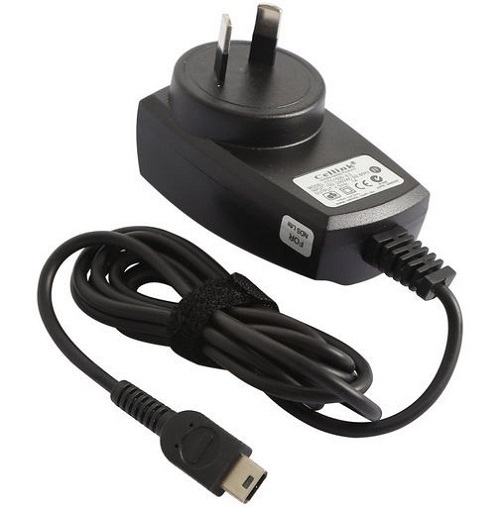
Finding a working power supply for a retro game console can be frustrating. Original adapters from the 1990s and early 2000s degrade over time and many were discarded years ago. For Australian gamers, collectors and repairers, sourcing a safe, compatible replacement is essential to keeping classic hardware running.
Retro gaming remains popular in Australia, with 82% of Australians playing video games and an average player age of 35. Many of these players grew up with consoles like the Nintendo Entertainment System (NES), Super Nintendo (SNES), Sega Dreamcast and original PlayStation. However, only 13% of pre-2010 games remain commercially available, which drives demand for original hardware and the power supplies needed to run them.
This article explains when to replace a power supply instead of repairing it, what compatibility means for retro consoles and why selecting the right adapter matters for both safety and performance.
Is It Better To Replace Instead of Repair
Most retro console power supplies are unregulated or linear adapters. Over time, internal components such as capacitors and transformers can wear out, leading to unstable voltage output, excessive heat or complete failure. Repairing these units is rarely practical for the average user.
Replacement is typically the better option when:
- The original power supply no longer powers the console at all
- The adapter becomes unusually hot during use
- Voltage output is inconsistent, causing the console to reset or fail to boot
- The cable insulation is cracked, frayed or exposed
- The original unit has been lost or damaged beyond safe use
Attempting to repair a degraded power supply without proper testing equipment can result in further damage to the console or create a safety hazard. In Australia, electrical safety is taken seriously and using faulty or modified adapters may not meet general safety expectations, even if no formal certification is required for low-voltage DC adapters.
When repair might be considered:
- The issue is limited to a damaged cable or plug that can be safely replaced
- The user has electronics experience and access to a multimeter and soldering equipment
- The original adapter has sentimental or collector value and the console is not at risk
For most users, a quality replacement adapter from a specialist supplier offers a safer, faster and more reliable solution.
Retro Console Charger Compatibility
Compatibility goes beyond simply matching the plug size. Retro consoles were designed with specific voltage, current and polarity requirements. Using an incorrect adapter can result in poor performance, permanent hardware damage or safety risks.
Key Compatibility Factors
| Factor | Why It Matters |
|---|---|
| Voltage (V) | Must match the console’s requirements exactly. Too high can damage circuitry; too low prevents the console from powering on. |
| Current (mA or A) | The adapter must supply at least the current the console requires. Higher current capacity is safe; lower is not. |
| Polarity | The plug tip must be either centre-positive or centre-negative as specified by the console. Reversing polarity can cause immediate failure. |
| Plug Size and Type | The physical connector must fit securely and make proper contact. Common sizes include 5.5mm × 2.1mm and 5.5mm × 2.5mm barrel plugs. |
| AC vs DC Output | Most retro consoles require DC power. Some older systems use AC adapters that output AC voltage, not DC. Check the console’s label. |
Common Retro Console Power Requirements
| Console | Voltage | Current | Polarity | Notes |
|---|---|---|---|---|
| NES (AU/PAL) | 9V AC or 10V DC | ~1.3A | N/A (AC) or centre-negative | Original PAL adapters output AC; many replacements use DC |
| SNES (AU/PAL) | 9V–10V DC | ~1.2A | Centre-negative | Compatible with some NES replacements |
| Sega Mega Drive / Genesis | 9V–10V DC | ~1.2A | Centre-negative | Model 1 and Model 2 differ slightly |
| Nintendo 64 | 3.3V and 12V DC | ~1A combined | Proprietary plug | Requires a specific multi-voltage adapter |
| Sega Dreamcast | AC power cable (mains) | N/A | IEC C7 or C5 | Uses internal PSU; replacement is a standard AC cable |
| PlayStation 1 | AC power cable (mains) | N/A | IEC C7 | Uses internal PSU |
| Gameboy Micro | 5.2V DC | ~450mA | Proprietary USB-style plug | Unique connector; not compatible with standard USB |
| Nintendo DS Lite | 5.2V DC | ~450mA | Proprietary plug | Same voltage as Gameboy Micro but different connector |
Always check the label on the underside or rear of the console before purchasing a replacement adapter.
Regional Differences
Australian and European (PAL) consoles often have different power requirements compared to North American (NTSC) or Japanese models. For example:
- PAL NES consoles typically used 9V AC adapters, while US models used 9V DC
- PAL SNES consoles may use 9V or 10V DC, while US models used 10V DC with centre-negative polarity
Using an adapter designed for a different region can cause compatibility issues or damage. When purchasing a replacement, confirm it is suitable for Australian or PAL models.
Here’s Why You Should Buy from Campad Electronics
Campad Electronics specialises in retro console power adapters and understands the specific needs of Australian retro gamers, collectors and repairers. The company stocks replacement power supplies for a wide range of classic and modern consoles, including:
- Nintendo NES and SNES power supplies designed for Australian PAL models
- Nintendo DS Lite chargers with the correct proprietary plug and voltage
- Gameboy Micro chargers, including standard and USB options
- Sega Dreamcast and Saturn AC power cables at affordable prices
- Sony PlayStation power cables for PS1 through PS5
- Xbox power cables for original Xbox, Xbox One and Xbox Series consoles
What Sets Campad Electronics Apart
Australia-Wide Fast Delivery:
Campad Electronics ships across Australia, ensuring that replacement adapters reach customers quickly. For players with a non-working console, fast delivery means less downtime.
Focus on Compatibility and Safety:
Each product is selected to match the voltage, current and polarity requirements of the intended console. This reduces the risk of damage and ensures reliable performance.
Affordable Pricing:
Replacement power supplies and cables are priced competitively, with many products available for under $20. For example, the Sega Dreamcast AC power cable is priced at $6.99 plus shipping.
Range Across Retro and Modern Consoles:
Whether restoring a 1990s system or replacing a cable for a current-generation console, Campad Electronics stocks a comprehensive range.
Support for Collectors and Repairers:
Campad Electronics serves not only casual gamers but also collectors seeking to maintain original hardware and repairers who need reliable components for restoration projects.
Practical Advice for Buyers
When selecting a replacement power supply:
- Verify the console model and region (PAL vs NTSC)
- Check the voltage, current and polarity requirements on the console’s label
- Confirm the plug type and size match the console’s power input
- Avoid generic “universal” adapters with adjustable voltage unless they can be locked to the correct setting
- Purchase from a supplier with a clear returns policy in case of compatibility issues
Campad Electronics provides detailed product information to help buyers select the correct adapter for their console.
Conclusion
Replacing a worn or missing power supply is often the most practical solution for reviving a retro console. Matching the correct voltage, current, polarity and plug type is essential for safe and reliable operation. For Australian retro gamers, collectors and repairers, choosing a specialist supplier with a focus on compatibility and fast delivery reduces frustration and protects valuable hardware. Whether restoring a childhood favourite or maintaining a collection, a quality replacement adapter ensures the console remains playable for years to come.